How to play Roulette
Learn the basics of how Roulette works
Written By _flush_f0x_
Last updated 14 days ago
Roulette is one of the simplest casino games to learn: you bet on where a ball will land on a spinning numbered wheel. Every bet on the table is just a different way of covering more or fewer of those numbers: fewer numbers pay more, more numbers pay less. This guide covers the wheel, how a round works, every bet type, and what each one pays.
The wheel
A European roulette wheel has 37 numbered pockets: the numbers 1–36, split between red and black, plus a single green zero. The numbers are deliberately scattered around the wheel rather than in sequence, alternating red and black, so no section of the wheel is “luckier” than any other.
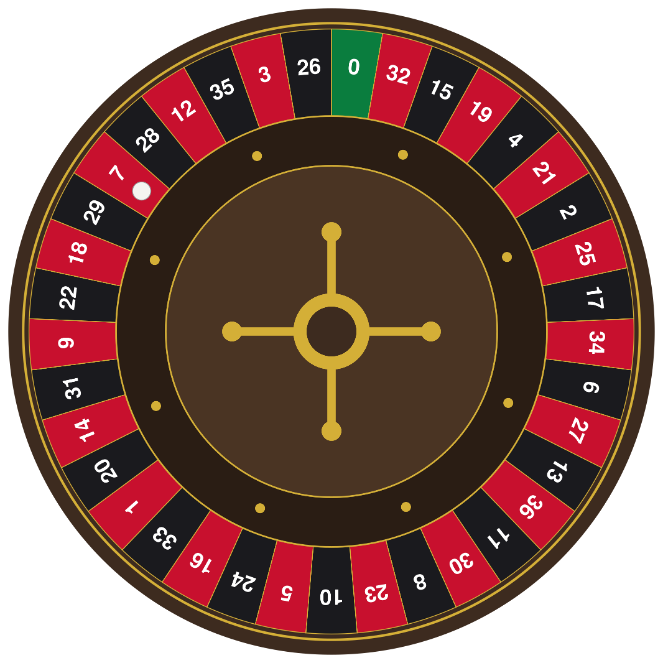
Figure 1 — The European wheel: 36 red and black numbers plus a single green zero
How a round works
Choose your chip value and place your bets on the table layout. You can place as many different bets as you like in the same round.
When the betting timer ends (or the dealer calls no more bets), the wheel spins and the ball is released in the opposite direction.
The ball settles into a numbered pocket. That number and its colour, column, dozen and so on is the result for every bet on the table.
Losing bets are cleared, winning bets are paid according to the payout table below, and your original stake on a winning bet is returned alongside the winnings.
A new betting window opens and the next round begins.
The table layout
All betting happens on the layout, which mirrors the wheel’s numbers in a neat grid. It has two zones: the numbered grid in the middle for inside bets, and the boxes around it for outside bets.
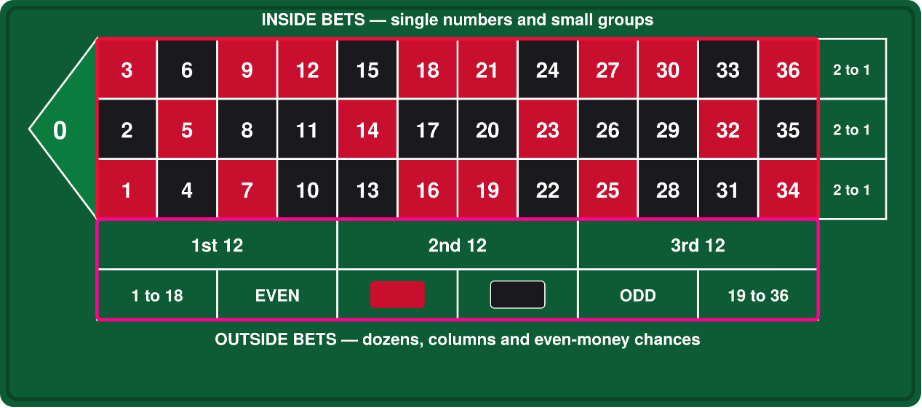
Figure 2 — The layout: inside bets on the numbered grid, outside bets around it
Inside bets: fewer numbers, bigger payouts
Inside bets are placed on the numbered grid itself. Where you put the chip determines what you cover: squarely on a number for just that number, or on a line or corner to split the bet across neighbouring numbers.
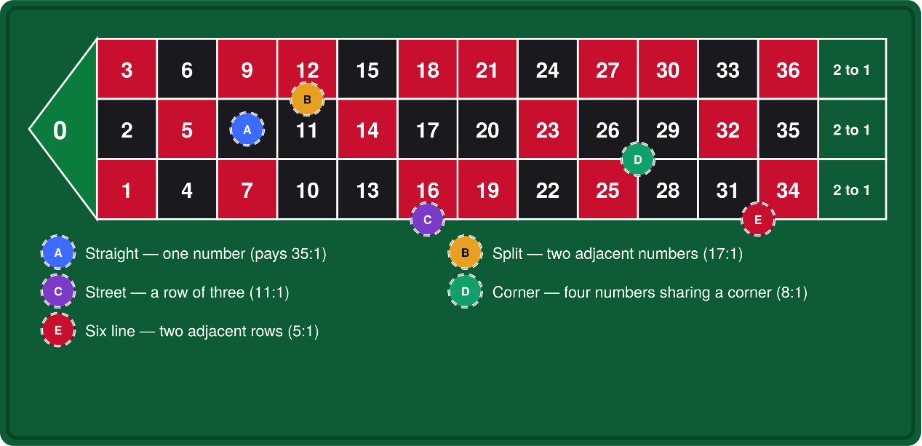
Figure 3 — Inside bets: chip position decides what you cover. Chip A sits on the number 8.
Straight (A): chip fully inside one number’s box. The classic long shot: one number, 35:1.
Split (B): chip on the line between two adjacent numbers. Either wins at 17:1.
Street (C): chip on the outer edge of a row of three (e.g. 16-17-18). Pays 11:1.
Corner (D): chip on the cross where four numbers meet. Pays 8:1.
Six line (E): chip on the outer edge where two rows of three meet, covering six numbers at 5:1.
Outside bets: more numbers, steadier wins
Outside bets sit in the boxes around the grid and cover large groups of numbers in one chip. They win far more often, but pay less.
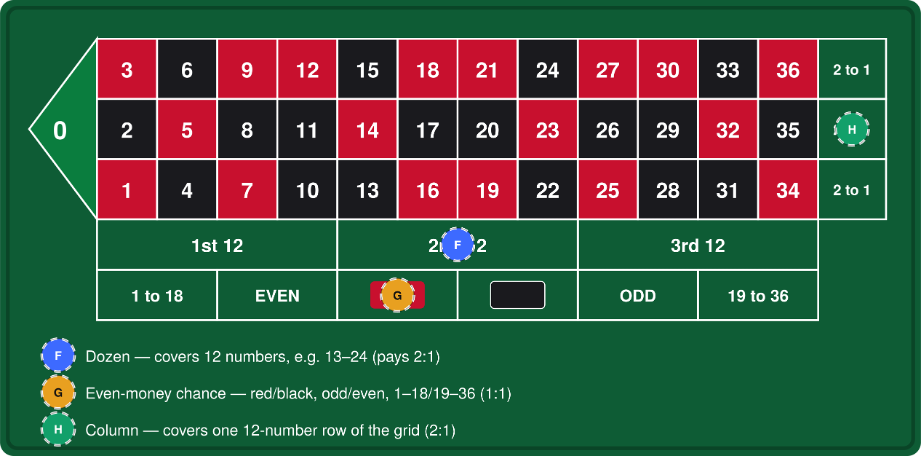
Figure 4 — Outside bets: dozens, columns and the even-money chances
Dozens (F): 1st 12 (1–12), 2nd 12 (13–24) or 3rd 12 (25–36). Pays 2:1.
Even-money chances (G): red or black, odd or even, 1–18 or 19–36. Each covers 18 numbers and pays 1:1.
Columns (H): the “2 to 1” boxes at the end of the grid, each covering one 12-number row across the layout. Pays 2:1.
How the green zero works
Zero is the wheel’s wild card: it belongs to no colour, dozen or column, so when it lands, only the number bets that include it cash in. A straight on 0, or a split or corner touching it, wins while the outside bets sit the round out, which is why plenty of players keep a small chip on zero for exactly that moment.
Payouts and odds
Payouts are quoted as X:1 a winning 10 straight bet at 35:1 pays 350 in winnings plus your $10 stake back. Win chances below are for a European (single-zero) table.
A neat piece of roulette knowledge: payouts are set as if the wheel had 36 pockets while it actually has 37, and that one green pocket is the entire house edge. A slim 2.70%, identical on every bet, which means you can choose your bets purely on the ride you want.
European vs American roulette
American tables add a second green pocket, the double zero, for 38 pockets in total, while paying exactly the same as European tables. That nearly doubles the house edge. If you have the choice, single-zero is always the better game.
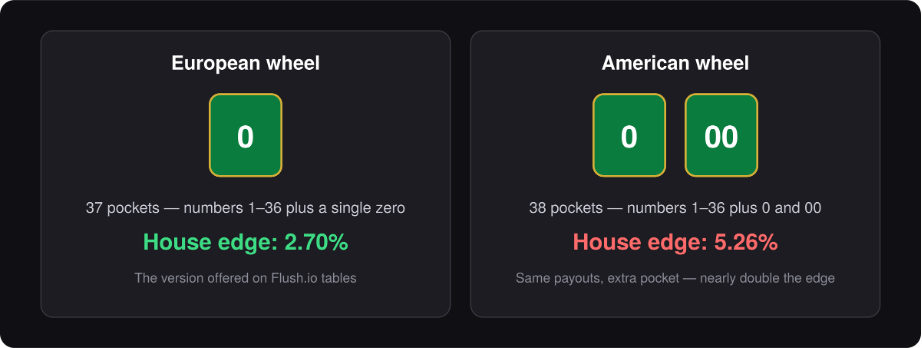
Figure 5 — One extra pocket, same payouts: why single-zero is the better table
French rules: la partage & en prison
Some single-zero tables use French rules: if the ball lands on zero, even-money bets either return half your stake (la partage) or are held “in prison” for the next spin (en prison). Both cut the house edge on even-money bets to 1.35%: the best odds in roulette. Check the game’s info panel to see whether these rules apply.
Good to know
Every spin is a fresh start. The wheel has no memory, which is part of the charm: each spin is its own moment, and the number-history boards are there for the atmosphere.
Systems change the ride, not the maths. Progressions like the Martingale repackage when your wins and losses arrive while every bet keeps the same slim edge. Enjoy them for the rhythm if you like, sized to your bankroll and the table limits.
Table limits matter. Every table has minimum and maximum stakes, and inside/outside bets often have separate limits: they’re shown in the game’s limits panel.
Play your way. Pick the bets that match the ride you want, set your budget, and enjoy the spin: roulette at its best is pure, simple drama.
Was this helpful?
Still need help? Ask the team