How to play Multi-Payline Slots
Learn about multi-payline slots and how to play them
Written By _flush_f0x_
Last updated 14 days ago
Where a classic slot watches one row, a multi-payline slot watches ten, twenty or fifty patterns at once, every spin. Most modern video slots are multi-payline games, so this guide is really about a skill: reading what a multi-line game is telling you, because the two most common misunderstandings in all of slots both live here. One is about how wins are quoted; the other is about wins that are not really wins.
What a payline is
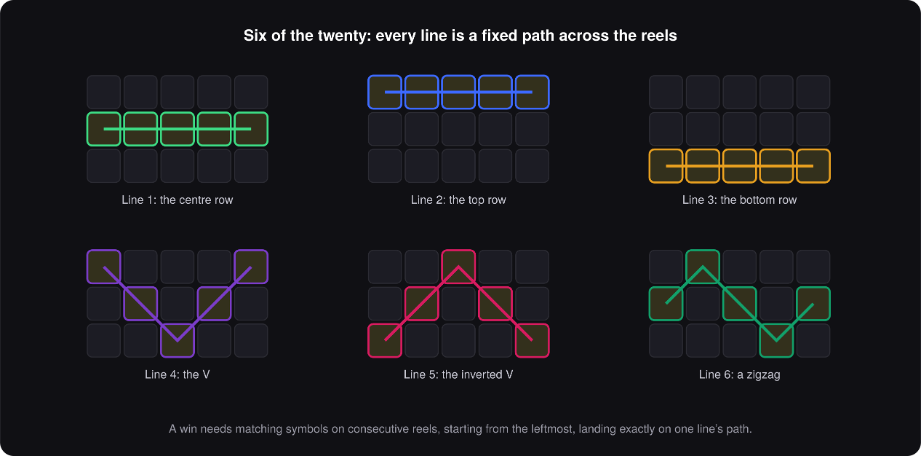
Figure 1: each line is a fixed path; a 20-line game checks twenty of these on every spin
A payline is a predefined path across the reels. On each spin the game checks every active line independently: matching symbols on consecutive reels from the left, sitting exactly on that line’s path, pay according to the paytable. The full map of every line’s shape is in the paytable, though on modern fixed-line games you rarely need it; the game highlights winning paths for you.
The bet maths, and the multiplier trap
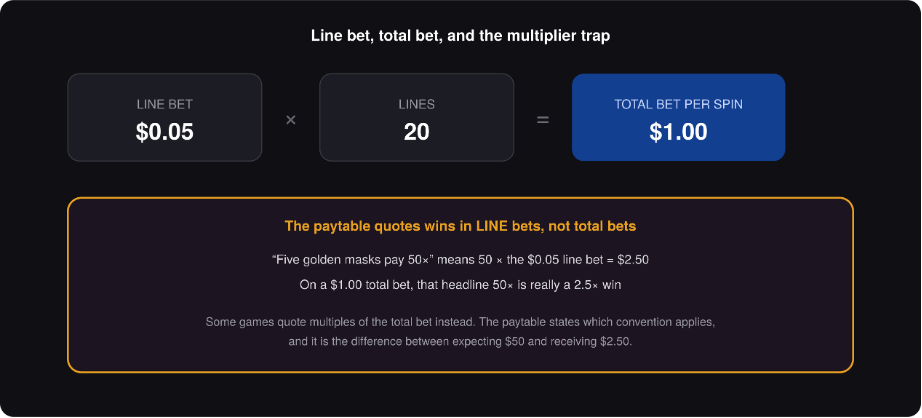
Figure 2: total bet is line bet times lines, and paytable multiples usually refer to the line bet
This is the single most common source of payout confusion on multi-line slots. When a paytable says a combination pays 50×, that usually means fifty times the line bet, which on a twenty-line game is just 2.5 times what the spin cost you. Neither convention is wrong, and some games do quote total-bet multiples instead, but the paytable always states which one applies. Checking it before playing recalibrates every expectation the game will set.
The win that costs money
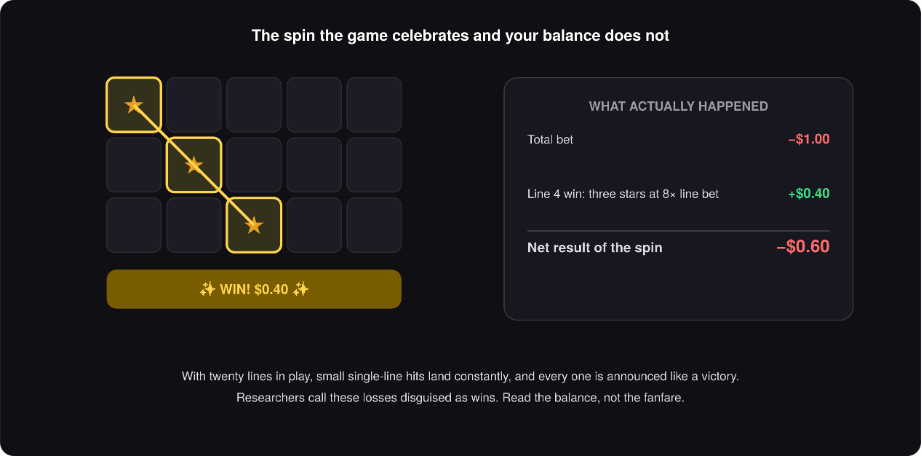
Figure 3: a real win on one line, a net loss on the spin
With many lines active, small hits on one or two lines happen constantly, and the game celebrates each one with the full win presentation. Whenever the celebrated amount is smaller than the total bet, the spin lost money. Researchers who study slot design call these losses disguised as wins, and multi-payline games produce them by construction: more lines means more frequent small hits and more frequent fanfare. Nothing about this is hidden; the win amount is displayed every time. The skill is simply comparing that number to your total bet, and letting your balance rather than the sound design tell you how the session is going.
More lines is not better odds
Playing more lines buys more frequent wins, not more return. Every line carries the same maths, so twenty lines at 0.05 and one line at 1.00 cost the same and carry the same RTP; they differ only in texture. Many lines produces a smoother stream of small hits, few lines produces rarer, relatively larger ones. It is a volatility knob, exactly like the cashout target in crash or the tier choice in our volatility guide.
Terms worth knowing
Good to know
Fixed lines are the modern norm. Most current games activate every line automatically and only ask for a total bet, which quietly removes the old selectable-lines pitfalls. Where line selection exists, check the rules for anything that requires all lines to be active.
The game finds your wins. You never need to scan twenty patterns yourself; winning lines are drawn on screen and itemised in the win breakdown. The paytable’s line map is reference material, not homework.
Ways and clusters are the successors. Ways-to-win and cluster-pays games, covered in the general and video slots guides, dissolve fixed paths entirely. The bet maths lesson carries over: always check what unit a quoted multiplier refers to.
Everything upstream still applies. Lines change how outcomes are scored, not how they are generated. RTP versions, volatility and the RNG behave exactly as described in their own guides.
Set a budget and read the number. Multi-line games are engineered to feel busy and rewarding regardless of results. Decide your budget before you spin, and make one habit non-negotiable: compare each celebrated win to the total bet. That single habit defuses most of what this format does to perception.
Was this helpful?
Still need help? Ask the team