What is Etherium?
Understand what Etherium is and how it works
Written By _flush_f0x_
Last updated 14 days ago
Ethereum launched in 2015 with a bigger ambition than being only money. Where Bitcoin set out to be a form of digital currency, Ethereum was designed as a programmable platform: a network that developers can build applications on top of, and that other tokens, including the two largest stablecoins, can run on. Its own currency, ETH, is the second most valuable cryptocurrency in the world and powers everything that happens on the network.
What Ethereum is
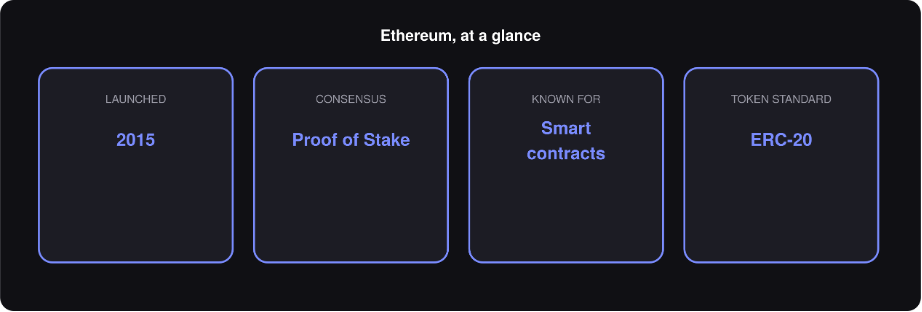
Figure 1: Ethereum, at a glance
The clearest way to picture Ethereum is as a shared, global computer that anyone can build on. This ability to run programs, known as smart contracts, is what sets it apart. A smart contract is simply code that runs exactly as written, automatically, without anyone able to interfere with it, and this is the foundation for a huge range of applications as well as for tokens issued on the network.
That programmability is why Ethereum matters far beyond its own coin. When our other guides mention that USDT or USDC can travel on the ERC-20 rail, that rail is Ethereum. Thousands of other tokens and applications live on it too, which keeps it one of the busiest and most important networks in all of crypto.
How it works
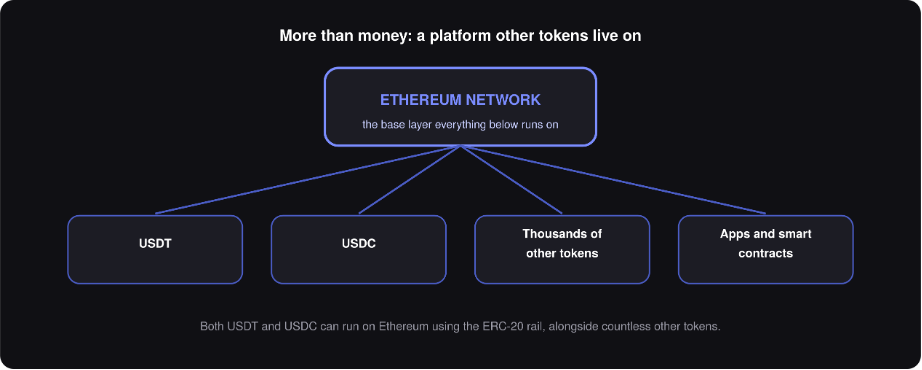
Figure 2: one network, many tokens built on top
Ethereum secures itself through a system called Proof of Stake, which it moved to in 2022. Instead of miners competing with computing power, participants called validators lock up, or “stake”, their own ETH as a commitment to following the rules honestly. Validators are then chosen to confirm blocks of transactions, and they lose part of their stake if they try to cheat. This keeps the network secure while using a tiny fraction of the energy that mining requires.
Every action on Ethereum, from a simple transfer to running a complex application, requires a small fee paid in ETH. This fee is universally called gas, and it exists to pay the validators and to keep the network from being overloaded.
ERC-20: the standard that ties it all together
ERC-20 is the shared technical standard most tokens on Ethereum follow, which is exactly why our crypto rails guide lists it as one of the rails USDT and USDC can travel on. Any ERC-20 token relies on the Ethereum network underneath it to move, so sending one always means paying a small gas fee in ETH.
Understanding gas fees
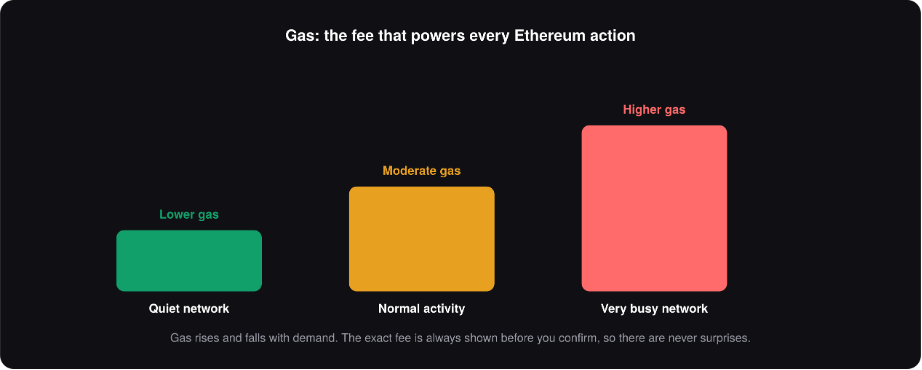
Figure 3: gas rises and falls with how busy the network is
Gas is the one part of using Ethereum most worth understanding, because it is the thing that varies. When the network is quiet, gas is low; when it is very busy, gas rises, because everyone is competing for space in the next block. This is why an Ethereum transfer can cost more at some times than others, and it is why faster, cheaper networks like Tron and Solana have become popular for simple stablecoin transfers. Whatever the current level, the exact fee is always shown before you confirm, so there are never surprises.
Ethereum at a glance
What a transfer looks like in practice
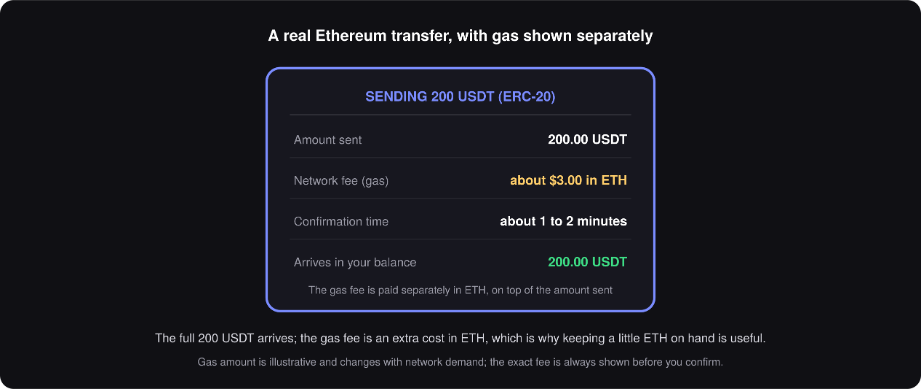
Figure 4: a real transfer, with the gas fee broken out
Here is what actually happens when you send, say, 200 USDT over Ethereum: the full 200 arrives at the other end, and separately a small gas fee is taken in ETH to pay for the transaction. That is the one quirk worth planning for: because gas is paid in ETH, it helps to keep a little ETH in your wallet even when you are mainly moving a token like USDT.
Using Ethereum on Flush.io
You might deposit on Ethereum in two ways: sending ETH itself, or sending a token like USDT or USDC over the ERC-20 rail. In both cases, choose the coin on the deposit page, then make sure the network you send from is set to Ethereum (ERC-20) to match. As always, matching the network on both ends is the one rule that matters most, and our crypto rails guide covers it in full.
Good to know
Gas fees depend on network activity. Ethereum fees rise when the network is busy and fall when it is quiet, and the exact cost is always shown before you confirm.
It hosts far more than tokens. Ethereum also powers a vast range of applications, which is part of why it remains one of the most active networks in crypto.
Faster rails exist for simple transfers. For moving stablecoins cheaply, networks like Tron often cost less than Ethereum, as covered in our Tron guide.
ETH is a major coin in its own right. Beyond hosting other tokens, Ethereum’s own currency is one of the most widely held and supported cryptocurrencies.
Always match the ERC-20 network. When sending an ERC-20 token, both the sending and receiving ends must be set to Ethereum: our rails guide explains why this matters.
A dependable all-rounder. Wide support, deep compatibility and a long track record make Ethereum a solid choice for many kinds of transfer.
Was this helpful?
Still need help? Ask the team