What is Tron?
Learn about Tron, and how it works
Written By _flush_f0x_
Last updated 14 days ago
Tron launched in 2018 and has earned a very specific reputation: it is the network most people actually use to move stablecoins like USDT, thanks to a combination of genuine speed and remarkably low fees. If you have read our crypto rails guide, the TRC-20 rail featured there runs on Tron, and it is often the cheapest, fastest way to send a stablecoin anywhere.
What Tron is
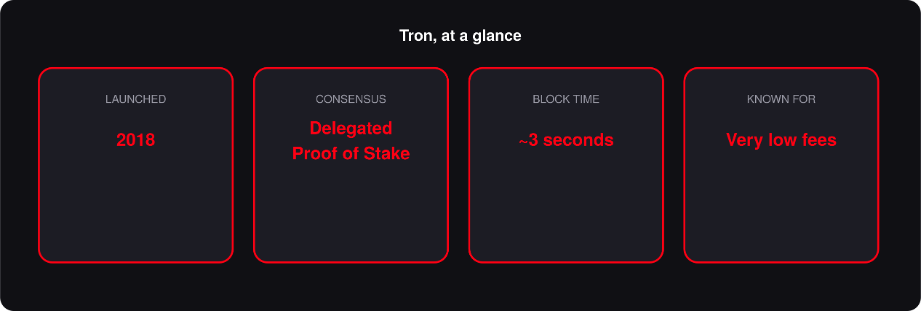
Figure 1: Tron, at a glance
Tron is a fast blockchain built to handle a high volume of transactions cheaply. Like Ethereum and Solana, it can host other tokens and applications, and it has its own native coin, TRX. But its most widely felt role by far is as the go-to network for stablecoins: an enormous share of all USDT transfers worldwide happen on Tron, precisely because it does that one job so cheaply and quickly.
For an everyday user, that focus is a real convenience. If your main use of crypto is moving a stable digital dollar in and out quickly without paying much, Tron is very often the network that makes that easiest.
How it works
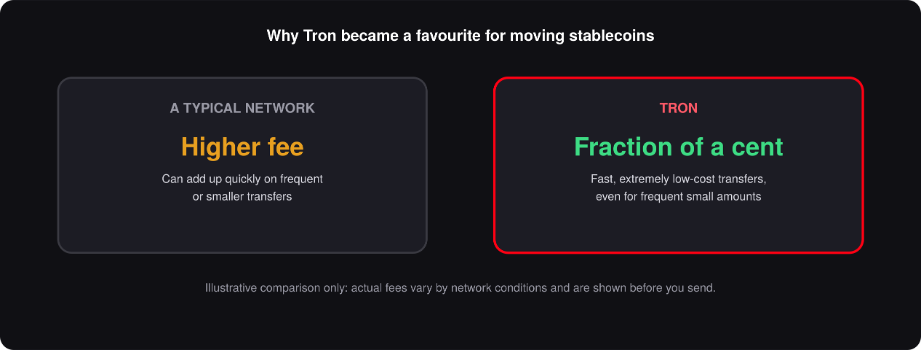
Figure 2: why the fees stay so low
Tron uses a system called Delegated Proof of Stake. Rather than every participant competing to confirm transactions, the network’s token holders vote to elect a limited number of representatives who take turns producing blocks. This more streamlined structure is a large part of why Tron can confirm transactions in just a few seconds, at a cost measured in fractions of a cent. The trade-off compared with more open networks is a smaller set of block producers, but for fast, cheap transfers the experience is excellent.
This is why TRC-20 is so popular for USDT
When our crypto rails guide compared a roughly five-cent fee against a several-dollar fee for the same USDT transfer, Tron was the network behind that low number. For everyday deposits and withdrawals of stablecoins, TRC-20 on Tron is consistently one of the cheapest and fastest options available anywhere.
When Tron is the right pick
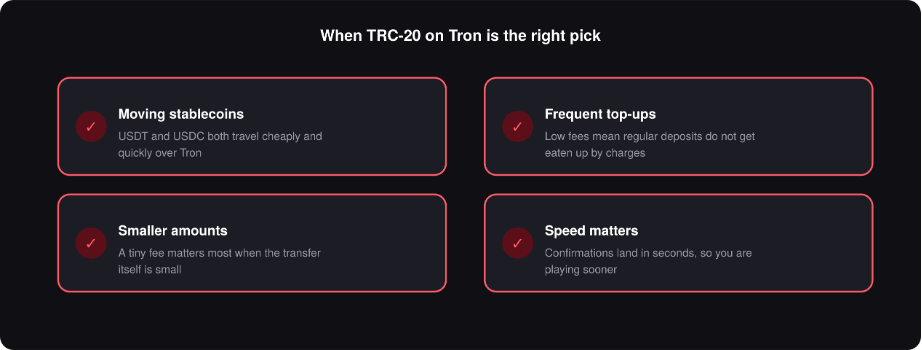
Figure 3: the situations where TRC-20 shines
T
ron is at its best in a few common situations: moving stablecoins, making frequent top-ups, sending smaller amounts where a tiny fee matters most, and any time speed is a priority. If your wallet or exchange offers a choice of networks for a stablecoin and TRC-20 is on the list, it is very often the option that gets your funds where they need to go fastest and cheapest.
Tron at a glance
What a transfer looks like in practice
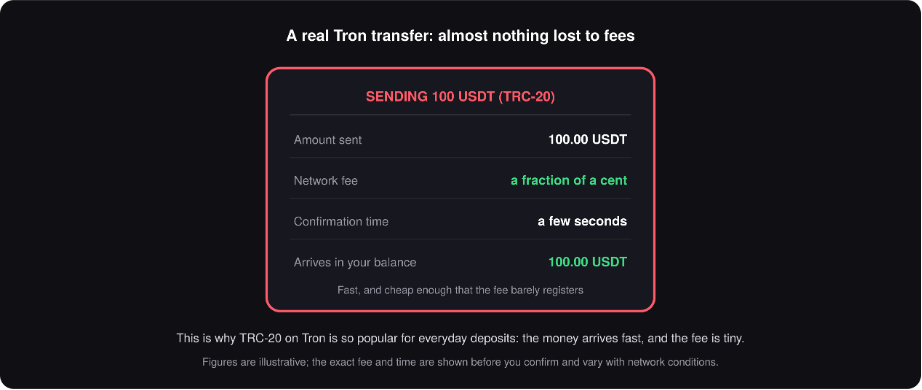
Figure 4: a real transfer, with the fee that barely registers
In practice, a Tron transfer is about as painless as crypto gets. You send your USDT, it confirms in a few seconds, and the fee taken along the way is so small it barely registers. Send 100 USDT and effectively 100 USDT arrives. That combination of speed and near-zero cost is exactly why TRC-20 has become the everyday default for so many people.
Using Tron on Flush.io
To deposit over Tron, choose your coin, most often USDT or USDC, on the deposit page and make sure the network is set to Tron (TRC-20) on both ends. Deposits typically confirm within seconds. As always, the single most important step is matching the network exactly: sending a TRC-20 transfer to a non-Tron address is the one mistake worth avoiding, and our crypto rails guide explains it in full.
Good to know
The default choice for many stablecoin transfers. If you are moving USDT or USDC and want the lowest fees, Tron’s TRC-20 rail is usually the answer.
Always match the rail exactly. Sending on TRC-20 only works if the receiving address also expects TRC-20: our crypto rails guide covers this essential rule.
TRX is its own coin too. Beyond hosting stablecoins, Tron has its own native currency, TRX, which you can deposit in its own right.
Built for a specific job, and excellent at it. Tron may host a smaller ecosystem than Ethereum, but for fast, cheap transfers it is genuinely hard to beat.
Ideal for frequent play. If you top up regularly, Tron’s low fees mean charges never eat meaningfully into your deposits.
A smart default at checkout. When a stablecoin offers a choice of rails, Tron is very often the fastest, cheapest option on the list.
Was this helpful?
Still need help? Ask the team