What is a Recovery Key?
Learn what a recovery key is for your crypto wallet
Written By _flush_f0x_
Last updated 14 days ago
A recovery key, also called a seed phrase or mnemonic, is a list of ordinary words, usually 12 or 24, that can fully recreate a crypto wallet from scratch. It is the single most important piece of information behind any self-custodial wallet: simple enough to write on a piece of paper, powerful enough to rebuild every key and every address inside your wallet, on any device, at any time.
A key, turned into something you can actually write down
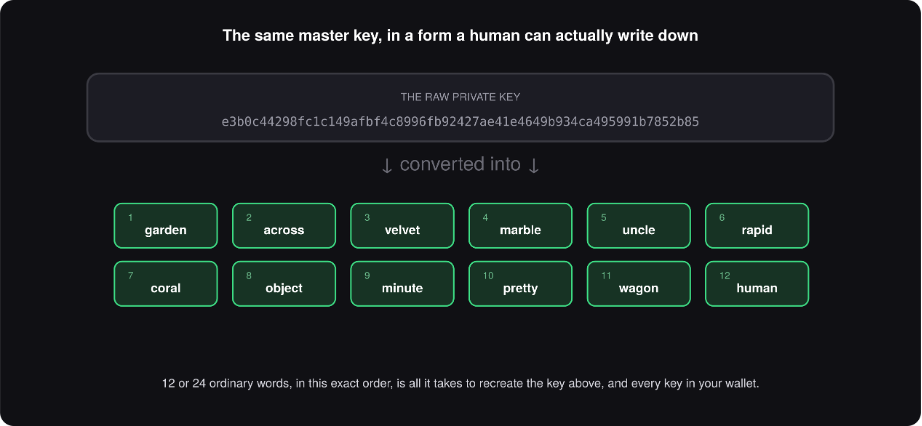
Figure 1: the same secret, in two very different shapes
The raw private keys inside a wallet are long, random strings of characters, practically impossible to write down accurately or remember. A recovery key solves that neatly: your wallet uses an open standard to convert that randomness into a short list of everyday words. The words themselves mean nothing on their own; what matters is the exact sequence, which mathematically encodes everything needed to rebuild your wallet from nothing.
How it brings a wallet back to life
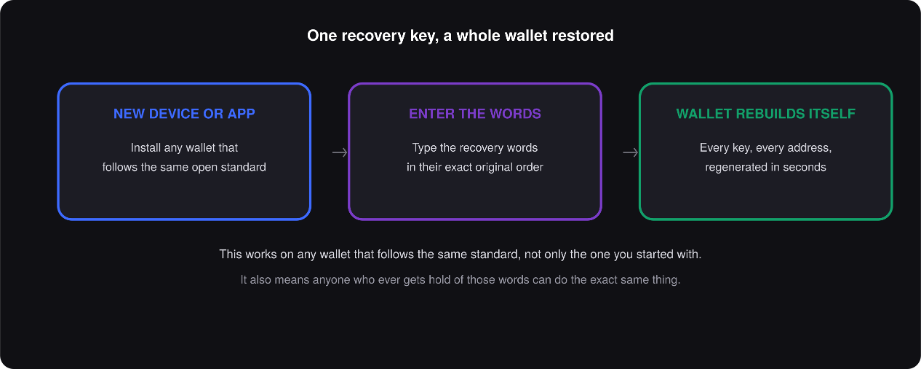
Figure 2: the same short list of words, works on any compatible wallet
Losing a phone, switching apps, or setting up a new device is never a problem for a self-custodial wallet, as long as you have the recovery key. Install a compatible wallet, enter the words in their original order, and every key, every address, and often your full transaction history reappears exactly as it was. This is what makes self-custody genuinely resilient: your wallet is never truly tied to one app or one device.
The words are the wallet
This is the one fact worth internalising completely: whoever has your recovery key can do exactly what you can do with your wallet, from any device, at any time, with no login required. It is not a password or a PIN; it is the wallet itself, written in a portable form. Our companion guide covers exactly how to store it safely.
Recovery key terms worth knowing
Good to know
It is created once, at setup. Your wallet generates a recovery key the moment you first create it, and almost every wallet asks you to write it down immediately, before you fund the wallet at all.
It works across brands, not just your original app. Because most wallets share the same open standard, your recovery key can restore your funds in a completely different wallet app if you ever need to switch.
It is different from a wallet password or PIN. A password just locks the app on your device; the recovery key is the wallet’s actual master key and works with or without that app installed at all.
Exchanges work differently. Funds held on an exchange do not use a personal recovery key in this way, since the exchange manages the underlying keys for you: this concept applies specifically to self-custodial wallets.
Treat it with the respect it deserves. Once you know what a recovery key really is, protecting it stops feeling like an inconvenience and starts feeling like exactly what it is: looking after the master key to your own funds.
Was this helpful?
Still need help? Ask the team